Osaka River Cruise at Night: When to Go

An Osaka river cruise at night is the better choice for most visitors, because the Glico sign and the rest of the Dotonbori neon only really register once the sky goes dark, and the canal boats run until 21:00 or later specifically to catch that window. Day departures still have a real case though: better photographs of the bridges themselves, shorter queues, and in winter, less time spent standing at an open-air pier. This guide works through which hour to actually book, from the first daytime run to the last boat of the night.
Quick answer
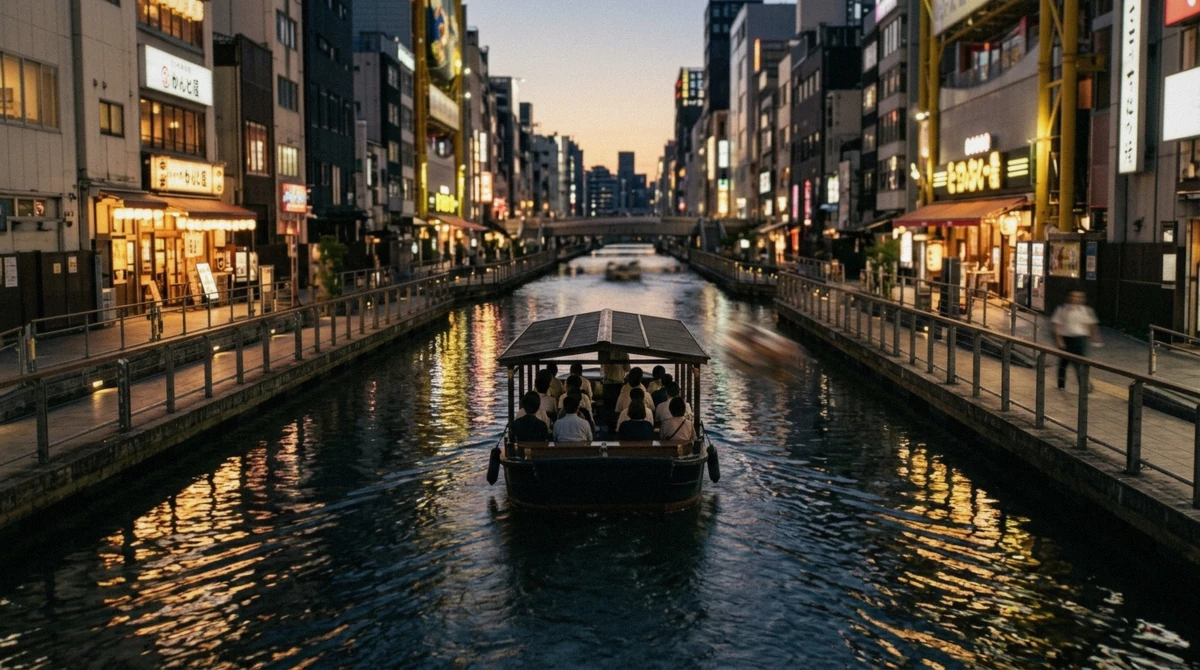
Night wins for most visitors: book a Dotonbori canal boat between 19:00 and 20:30 for the fullest neon with the Glico sign lit and the crowds not yet thinning. Daytime departures from 11:00 still make sense if you want clear photos of the bridges and canal architecture without glare, or you're travelling with young children who need an earlier boat.
Key takeaways
- Peak neon window: 19:00 to 20:30, when the Glico sign and surrounding signage are fully lit and most operators are still running full schedules
- The Dotonbori River Cruise runs 10:00 to 22:00 daily, the longest window of any canal boat
- The Wonder Cruise only starts its evening run at 17:00, with two isolated daytime slots at 16:10 and 16:40
- For a private, guide-led evening on the water instead of a shared 20-minute run, see the private night charter
- Full fare and pass detail for any departure time lives on our cost guide
- Exact pier addresses and what happens in rain are on our piers and times guide
The Short Answer on Night vs. Day
If you can only ride the Dotonbori canal once, do it after dark. The canal was built for this: narrow enough that the neon signs on both banks reflect straight onto the water, and low enough that a 20-minute boat puts you right at sign level rather than looking up from a bridge. Day still buys you something real, mainly clearer photographs of the bridges and buildings themselves and a shorter wait at the pier, so it's a legitimate choice, not a consolation prize, for anyone prioritizing those over the lights.
The Same Canal, by Day and After Dark
Day on the Dotonbori canal
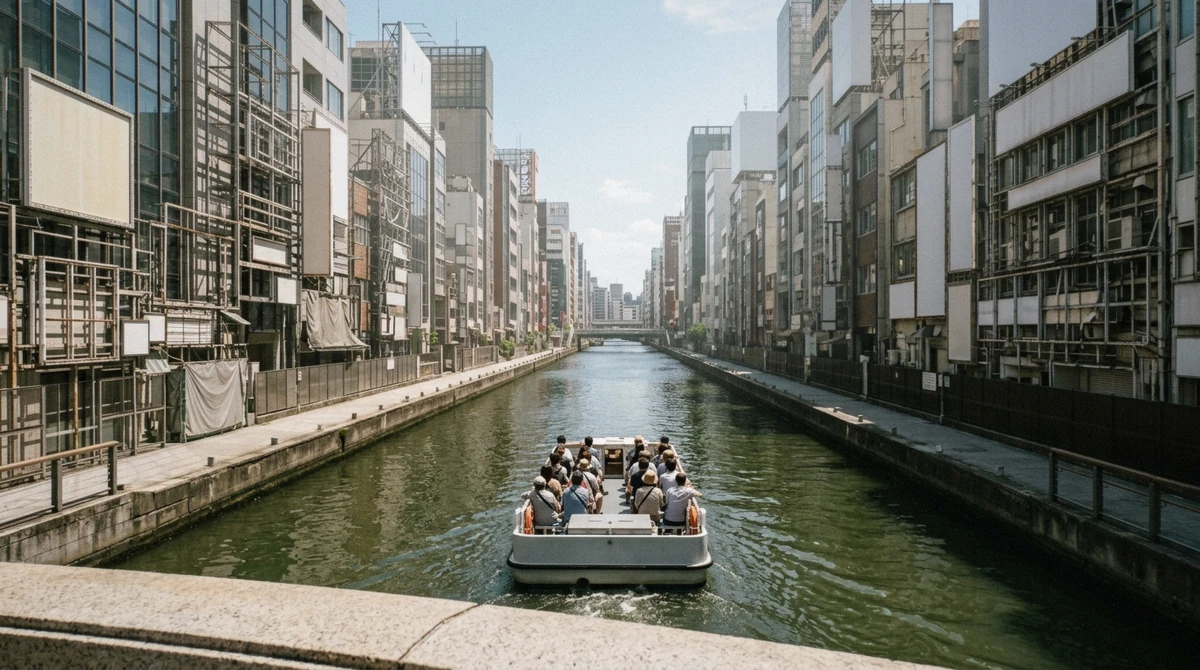
- Clear, well-lit photos of the bridges, the canal architecture and the Kani Doraku crab sign without neon glare washing them out
- Shorter queues at most piers; the busiest slots are consistently the evening ones
- Cooler and more comfortable in Osaka's hot, humid summer months
- The Tombori River Cruise and Pirates of Osaka both run from late morning, giving the widest choice of daytime slots
Night on the Dotonbori canal
- The Glico sign and the full run of neon signage are lit and at their most photogenic
- The canal itself feels different after dark, closer to the postcard image most visitors are chasing
- Wonder Cruise only really operates as a night boat, with two isolated daytime slots and its main schedule starting at 17:00
- Pirates of Osaka's night run stretches to about 25 minutes, five minutes longer than its daytime schedule, for a slightly fuller loop
Verdict Night is the stronger overall experience and the reason most people book a Dotonbori cruise at all, but day is the better choice if bridge and architecture photography without glare, or a shorter wait, matters more to you than the lit signage.
What the Neon Actually Is, and the Glico Sign
The Glico running man was first put up by Ezaki Glico in the Minami area in 1935, when the original sign stood about 33 metres tall. It came down in 1943 for wartime metal collection and was restored after the war; the current sixth-generation LED version was unveiled on 23 October 2014, standing about 20 metres tall and 10 metres wide, with a background that changes by season and event. Every Dotonbori canal boat, day or night, passes it, since it sits directly above the water on the operators' shared route.
The rest of the canal's neon is a mix of restaurant signage, the moving Kani Doraku crab and dozens of smaller shop and bar signs stacked along both banks, most of which only switch on as daylight fades. Operators route their boats past nine named bridges on the standard run, including Tazaemonbashi, Ebisubashi and Dotonboribashi, and the neon density is highest in the stretch between those first few crossings, which is also where nearly every published Dotonbori photo is taken from.
Which Departure Time to Book, Hour by Hour
Departures vary by operator; this table blends the three canal boats' published schedules into one hour-by-hour picture. Confirm the specific operator's slot when you book. Last verified: August 2026.
| Time | What you get |
|---|---|
| 11:00 | Tombori River Cruise's first departure of the day; clear daylight photos, minimal queue |
| 15:00 | Mid-afternoon daylight run; Pirates of Osaka and Tombori both running, still no neon |
| 17:30 | First hint of dusk in most seasons; Pirates of Osaka's night schedule and Wonder Cruise's main evening run both start around here |
| 19:00 | Full dark most of the year, neon at its most vivid, one of the busiest slots on all three canal boats |
| 20:30 | Still fully lit, slightly thinner crowds than the 19:00 to 19:30 peak |
| Last boat | Tombori River Cruise runs until 21:00; Wonder Cruise until 21:30; Pirates of Osaka's last night departure runs around 21:10 |
The single boat with the longest daily window is the Dotonbori River Cruise, operating 10:00 to 22:00 daily, which gives it the most flexibility if your evening plans are still unsettled when you land in Osaka.
An Evening in Dotonbori, Built Around the Boat
A sample evening for the 19:00 neon window, working backward from the boat to a realistic arrival time.
-
17:30
Head into Dotonbori
Give yourself time to find the pier before dark; Tazaemonbashi and the Wonder Cruise pier both sit within a few minutes of Nipponbashi station.
-
18:00
Early dinner or a takoyaki stop
The canal-front restaurants and street stalls fill up fast after 19:00, so eating before the boat rather than after avoids the worst of the queue.
-
18:45
Arrive at the pier
Reservation-required boats like Pirates of Osaka ask you to check in 15 minutes early; walk-up boats also get busier the closer it gets to 19:00.
-
19:00
Board for the neon run
About 20 to 25 minutes on the water past the Glico sign and the rest of the lit signage, the peak version of the ride.
-
19:30
Back on the canal-front walk
Post-cruise, the same stretch of Dotonbori is at its liveliest; a second pass on foot lets you photograph the signs from the bridges instead of the water.
-
20:30
A quieter second lap, if you want one
Booking a second, later boat around this slot gets the same lit canal with a noticeably thinner crowd than the 19:00 rush.
What Night Does to the Photographs
After dark, the canal's signage becomes the subject rather than a backdrop: the Glico sign and the neon banks reflect on the water directly beneath your boat, and a phone camera with any kind of night mode picks up far more color and detail than it would from a bridge overhead. The trade-off is that the bridges, the stonework and the canal's architecture itself go dark and mostly disappear from the frame, so a night ride is a neon-and-reflection photo, not an architecture one.
A daytime ride reverses that trade exactly: the bridges, the water level and the buildings read clearly, with none of the glare or motion blur that low light and a moving boat combine to produce, but the signage itself looks flat and unremarkable without its lights on. If you only get one ride and photography matters more than the general atmosphere, decide first which of the two you'd rather have.
When Day Beats Night
Day is the better call for a handful of real, specific reasons rather than as a fallback. Photographers chasing clean shots of the bridges and canal architecture, rather than neon, get better results in daylight. Families with very young children often find an 11:00 or early-afternoon slot easier to manage than a 19:00 departure that pushes bedtime back.
Winter travellers benefit from the milder daytime hours; Osaka's January mean temperature is 6.2°C, cold enough that standing at an open pier after dark has a real cost, against an August mean of 29.0°C when the evening air is the more comfortable choice by far.
Queues also run shorter earlier in the day across all three canal boats; the tightest waits cluster in the 18:30 to 20:00 window when everyone else has made the same decision you're weighing right now.
Night or Day, by Traveller Type
If you want the classic lit-up Dotonbori photo and nothing else matters more
book between 19:00 and 20:30, the fullest neon on all three canal boats.
If you're travelling with young children or an early bedtime
an 11:00 or early-afternoon slot is easier on the schedule and the queue is shorter too.
If you care more about photographing the bridges than the neon
ride during the day, when there's no glare and the canal's architecture is clearly visible.
If you're visiting in January or February
consider a daytime slot; Osaka's winter evenings average around 6°C at the open-air piers.
If you want the full neon experience without the 19:00 crowd
book the 20:30 slot instead, still fully lit with a noticeably thinner queue.
Book Your Slot
The two Dotonbori canal boats named above, plus the private option for a night on the water without a shared schedule.
 from $13
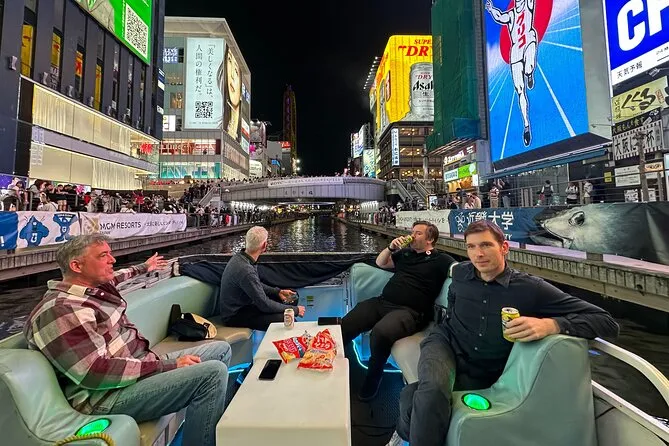
Dotonbori River Cruise: Glico Sign & Neon Views from the Water
The most popular osaka river cruise — 20 minutes of iconic Dotonbori views including the glowing Glico sign, neon-lit Ebisu-bashi Bridge, and the city's famous entertainment strip seen…
- Iconic Glico sign & neon-lit Dotonbori from the water
- Lounge-style seats for a VIP feel
- Bring your own drinks on board
- Free photo download from the crew
 from $13
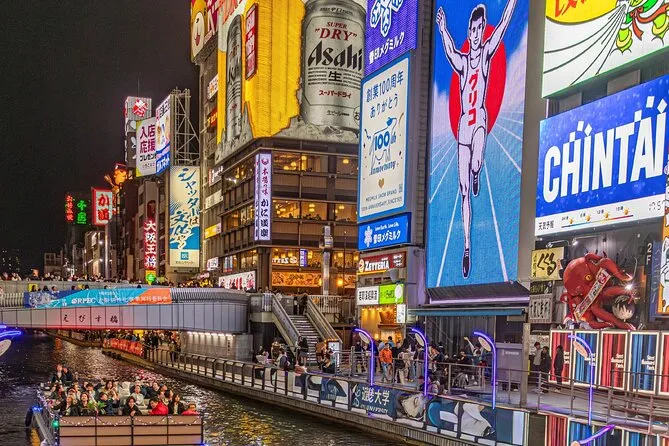
Wonder Cruise: Dotonbori Sightseeing with Beer Discount
Sail the Dotonbori River on this covered sightseeing cruise departing from Nihonbashi Pier, passing the Kani Douraku giant crab sign and the world-famous Glico Man billboard. On-board restroom…
- Covered boat — cruise rain or shine
- On-board restroom facility
- Beer discount coupon included
- See the Glico Man Sign & Kani Douraku giant crab
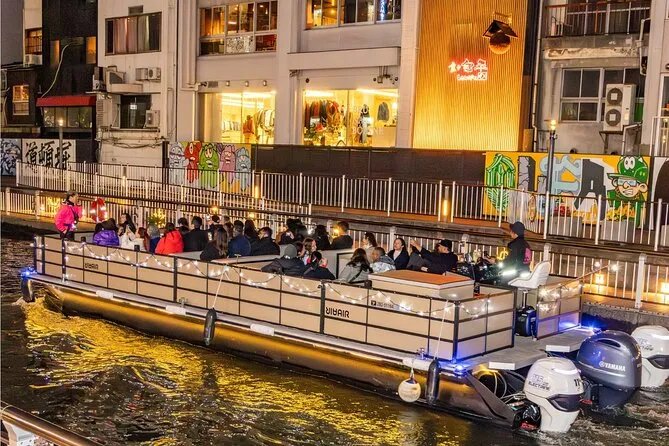 from $207
Private Osaka Night Cruise: 60 Minutes on the Okawa River
The premium osaka river cruise experience — a full 60-minute private voyage on the Okawa River with a live English-speaking guide, complimentary drink, and scenic stops past Osaka…
- Full 60-minute private cruise on the Okawa River
- Live English guide with local stories & insider tips
- Complimentary drink — alcoholic or non-alcoholic
- Views of Osaka Castle, Central Public Hall & Japan Mint
Locking In a Time
Most visitors do end up choosing night, and the schedule supports it: the Dotonbori River Cruise's 10:00 to 22:00 window and Wonder Cruise's run through 21:30 both leave plenty of room to fit the boat in after dinner rather than around it. Decide on architecture-first or neon-first before you look at a clock, then pick the hour that matches, using the table above rather than defaulting to whatever slot happens to be open when you arrive at the pier. If you're still weighing the canal against the Okawa or Osaka Bay boats entirely, which cruise to pick works through that decision first, and the neon canal boats are only one part of the wider comparison.
When the Last Boats Leave
Every operator has its own closing time, and the gap between the earliest and the latest is more than an hour. Last verified: August 2026.
| Boat | Evening service starts | Last departure | Note |
|---|---|---|---|
| Glico sign cruise | Runs from 10:00 | Operating hours end at 22:00 | The longest evening window on the canal |
| Wonder Cruise | 17:00 | 21:30 | Pass holders and platform bookings board only after 17:00 |
| Pirates of Osaka | 17:10 | 21:10 | The evening runs are about 25 minutes against about 20 by day |
| Tombori River Cruise | Runs from 11:00 | 21:00 | Departs on the hour and the half hour throughout |
| Santa Maria twilight cruise | Weekends and holidays only | 18:30 in the main season, 17:30 in September, 17:15 in October | Osaka Bay, not the canal, and it chases the sunset rather than the neon |
There is no restroom on board or en route on the short canal boats, which matters more on a 21:00 departure at the end of a long evening than it does at midday. Pier facilities vary, so use them before you queue rather than after.
Frequently Asked Questions
Is the Osaka river cruise better at night?
For most visitors, yes: the Glico sign and the surrounding neon are lit only after dark, and the canal is genuinely more photogenic then. Day still wins for clear architecture photos and shorter queues.
What time should I book the Dotonbori cruise?
Between 19:00 and 20:30 for the fullest neon with a slightly thinner crowd than the 19:00 peak. The Dotonbori River Cruise runs 10:00 to 22:00 daily, so there's flexibility either side of that window.
What time does the last Osaka river cruise leave?
Among the canal boats, Wonder Cruise runs latest, until 21:30. The Tombori River Cruise's last departure is 21:00, and Pirates of Osaka's last night run leaves around 21:10.
Can you see the Glico sign from the boat at night?
Yes, every Dotonbori canal boat, day or night, passes directly beneath the Glico sign; at night its LED display and the surrounding neon reflect on the water for a noticeably stronger photo than the daytime version.
Is the night cruise more expensive than the day cruise?
No, the walk-up adult fare is the same ¥2,000 (about $13) at every hour on the Dotonbori canal boats; timing changes the view, not the price. See our cost guide for the full fare table.
Do the boats run in winter?
Yes, year-round, though January's mean temperature of 6.2°C makes an open-air pier noticeably colder than August's 29.0°C, worth a warm layer if you're booking an evening slot between December and February.